Specifications for every electric car on the road. Browse 1011 full specs across 73 brands.
Select a manufacturer to see every drivetrain variant and its full specification sheet.
























New to EVs? Here's a quick primer on how they work, what shapes range and charging speed, and what to expect from cost and battery life over time.
An electric vehicle replaces the engine and fuel tank with a battery pack and one or more electric motors. Pressing the accelerator draws current from the battery to spin the motor directly — there's no gearbox with multiple ratios, no idling, and torque is available almost instantly from a standstill. Lifting off the accelerator or braking typically engages regenerative braking, which runs the motor in reverse as a generator to slow the car and send some of that energy back into the battery.
Range is the distance an EV can travel on a full charge, and it's shaped by more than battery size. Speed matters a lot — aerodynamic drag rises sharply above highway speeds, so a car often goes further at 90 km/h than at 130 km/h. Cold weather reduces range too, both because batteries are less efficient when cold and because cabin heating draws power that a gas car gets almost for free from waste engine heat. Terrain, tyre choice, and payload all play a smaller but real role as well.
Most EVs charge two ways. AC charging — at home overnight or at a slower public charger — trickles power in over several hours through the car's onboard charger and is the cheapest, gentlest way to keep a battery topped up. DC fast charging pushes power in directly at much higher rates, adding significant range in 20–40 minutes, which makes it the practical option for road trips but not something most owners rely on daily. Charging speed also naturally slows as the battery fills up, which is why the last 20% of a fast charge takes disproportionately longer than the first 20%.
EV batteries degrade gradually with age and charge cycles, similar to a phone battery but far more slowly — most manufacturers warranty the pack to retain around 70–80% of its original capacity after 8 years or roughly 160,000 km. Keeping the battery between about 20% and 80% charge for daily driving, and reserving 100% charges for trips, is commonly recommended to reduce long-term wear, though modern battery management systems already handle much of this automatically.
EVs typically cost more to buy than an equivalent gas car but less to run: electricity is usually cheaper per kilometer than fuel, and there's no oil changes, no exhaust system, and far fewer moving parts to wear out — regenerative braking also extends brake pad life considerably. Insurance and repair costs can run higher in some markets due to specialized parts and technicians, and how the math nets out over time depends heavily on local electricity and fuel prices, incentives, and how many kilometers you drive per year.
EVs produce no tailpipe emissions, but they aren't zero-impact end to end. Manufacturing a battery pack is energy- and resource-intensive, so a new EV typically starts with a higher carbon footprint than a comparable gas car before it's even driven. Over its lifetime that gap is generally offset and reversed, and how quickly depends heavily on the local electricity grid — an EV charged on a coal-heavy grid closes the gap more slowly than one charged on a grid with more renewables or nuclear power.
Guides, comparisons and EV news from our editorial team.
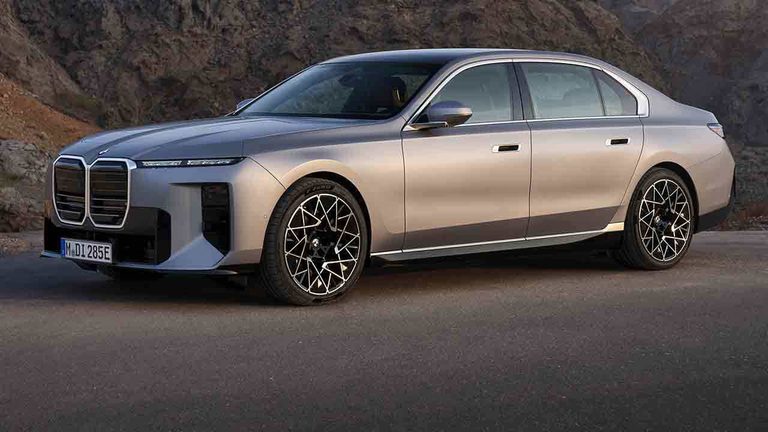
BMW Group has announced that its Level 2 advanced driver assistance will reach German cities in 2027. The company says the system has passed all safet…

Elon Musk has confirmed that both Tesla and SpaceX now have special committees of independent directors looking at whether the two companies should co…

Stellantis has arrived at the 2026 Paris Motor Show in force. It is bringing eight brands and more than 60 vehicles on a 5,340 m² stand in Hall 4, mor…

DS Automobiles has unveiled the F3VER, a compact electric concept that DS calls a manifesto for the brand’s future design direction. It goes on public…

Peugeot has revealed two all-electric concept cars at the 2026 Paris Motor Show: the RCZ Vision, a futuristic coupé with a solid-state battery, and th…

BYD has unveiled its biggest SUV yet for European buyers. The seven-seat Atto 8 made its debut at the Paris Motor Show on October 12, 2026, with a 115…
What Electricarly is, where the data comes from, and how to read it.
