Nissan has pulled an old nameplate out of storage for a new job. The Pixo, last seen in Europe as a rebadged Suzuki Alto built in India between 2009 and 2013, is now an all-electric A-segment hatchback — and it’s arguably the most important car Nissan will launch in Europe this decade, not because it’s exciting, but because it’s cheap.
The Big Idea: Share the Bill With Renault
Nissan didn’t design the Pixo’s underlying hardware from scratch. Instead, it leaned on the restructured Renault-Nissan-Mitsubishi Alliance — in which the two companies now hold mutual 15% stakes — to build the Pixo on Renault’s RGEV Small platform (formerly known as AmpR Small), the same architecture underpinning the new electric Renault Twingo. Both cars are assembled at Renault’s Revoz plant in Novo Mesto, Slovenia.
This isn’t a new strategy for Nissan. The current Micra EV follows an almost identical playbook, sharing its bones with the Renault 5 while wearing Nissan-specific styling. For a company that has struggled to keep pace with the wave of cheap electric hatchbacks flooding into Europe, badge-engineering off an established French platform is a faster, far cheaper route to market than developing a bespoke small-car platform alone.
Design: Pixelated, Not Just Twingo With a Badge
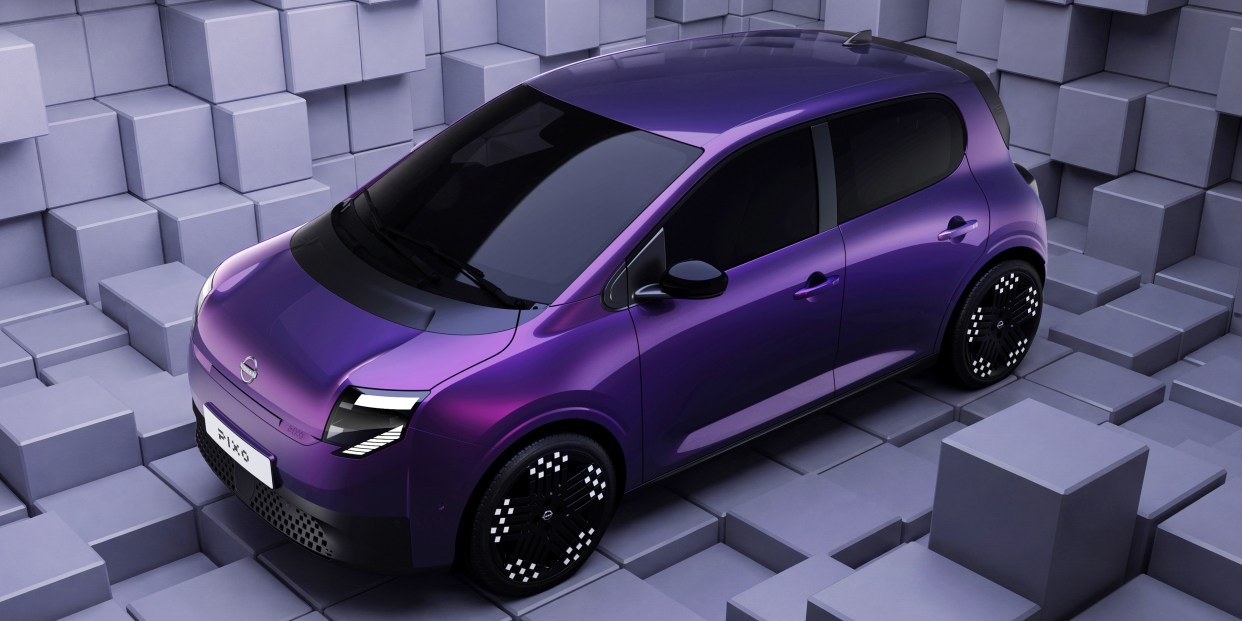
Nissan’s designers took the Twingo’s rounded, slightly cartoonish proportions and reworked the surfacing with sharper, more angular details. The front end swaps out any pretence of a combustion-era grille for a flat, slab-sided bumper and squared LED headlights with a deliberately pixelated light signature — a nod to the Pixo name itself. Around back, new light clusters echo Nissan’s K12-generation Micra, and the cabin and bodywork reportedly hide 23 small design Easter eggs, a wordplay on the Japanese words for “two” (ni) and “three” (san).
Specs: What’s Confirmed So Far
Nissan’s official reveal on September 23, 2026 confirmed the following:
- Motor: 60 kW (81 hp) front-mounted electric motor, 129 lb-ft of torque
- 0–62 mph: approximately 12.1 seconds
- Battery: 27.5 kWh Lithium Iron Phosphate (LFP) pack — a first for a European Nissan
- WLTP range: up to 161 miles (roughly 260 km)
- DC fast charging: 50 kW, 15–80% in about 28 minutes
- AC charging: 11 kW onboard charger, empty-to-full in around 2.5 hours, with bi-directional Vehicle-to-Load (V2L) support
- Curb weight: approximately 2,833 lb
- Dimensions: 149.4 in long, 70.5 in wide, 59.5 in tall, 98.1 in wheelbase, 32.5 ft turning circle
- Cargo: 12.6 ft³ with rear seats up (including a dedicated 1.77 ft³ underfloor compartment), 43.1 ft³ with seats folded
The choice of LFP chemistry over more energy-dense nickel-based batteries is a deliberate cost play: LFP cells are cheaper to produce and hold up better under repeated full-charge cycles, which matters for a car aimed at drivers who’ll plug in nightly rather than road-trip regularly.
For reference, pre-reveal reporting throughout 2025 and early 2026 had circled around a similar package — an ~80 hp motor, a roughly 27.5 kWh CATL-sourced LFP pack, and a projected range in the 250–310 km band — so the final specs landed close to where industry watchers expected.
How It Stacks Up on Size
The Pixo slots into a genuinely crowded micro-EV segment:
| Model | Length | Notes |
|---|---|---|
| Nissan Pixo | 149.4 in | This car |
| Renault Twingo E-Tech | 149.2 in | Mechanical twin |
| Hyundai Inster | 150.6 in | Larger, pricier rival |
| Dacia Spring (2nd-gen) | 145.7 in | Also built on RGEV Small in Slovenia |
Despite sitting near the bottom of that size range, Nissan claims the Pixo’s cargo capacity beats cars a full class above it — a common trick with dedicated EV platforms, which don’t need to package a transmission tunnel or engine bay.
Tech: More Than You’d Expect for the Price
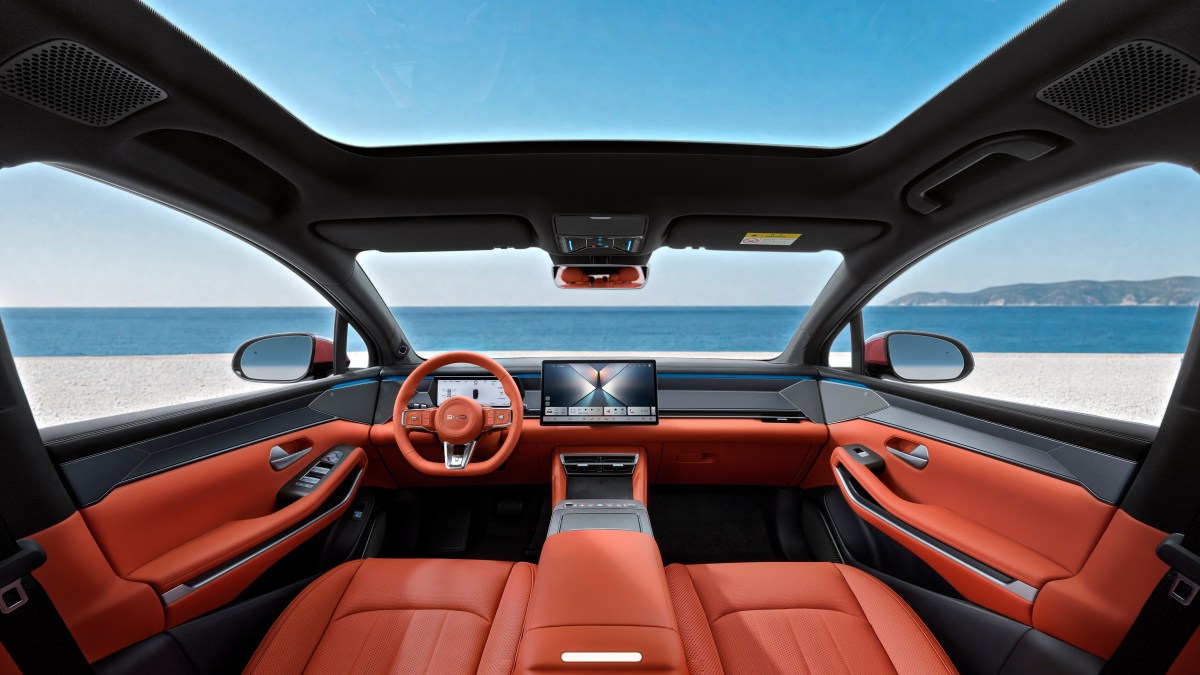
Inside, the Pixo uses Google’s built-in infotainment stack with the Gemini assistant integrated into a 10-inch touchscreen — handling navigation, real-time charger lookups, and voice queries without menu-diving. Nissan has also added facial recognition that identifies the driver and automatically restores their preferred mirror, climate, and display settings. A standard e-Pedal system allows one-pedal driving through regenerative braking, a feature Nissan pioneered on the Leaf and is now bringing down into the cheapest end of its lineup.
Price and Timing
Nissan has not confirmed final pricing, and order books won’t open until December 2026, ahead of sales starting in early 2027. Estimates have varied by market and by source throughout the lead-up to the reveal:
- UK reporting (What Car?, Electrifying.com) pointed to a starting price around £17,000–£18,000
- Continental European estimates (Autotriti, HDMotori) suggested under €20,000, with some reports as precise as €19,500
- U.S.-equivalent projections put the entry price at under $23,000
Whichever figure lands, the strategic goal is the same: keep the Pixo priced meaningfully below the average new EV, at a moment when even mainstream superminis are creeping toward $35,000 in some markets.
Why This Car Matters for Nissan
Nissan was an early EV pioneer — the original Leaf, launched in 2010, was one of the first mass-market electric cars sold globally. But the company has since ceded ground in Europe’s budget-EV segment to rivals offering cheaper, more visually dramatic small crossovers. The Pixo, slotting in below both the Micra and the still-to-come Juke EV, gives Nissan its first genuinely affordable European EV entry point since the Leaf’s early years.
Manufacturing the Pixo in Slovenia alongside the Twingo also has a trade-policy benefit: it keeps the car outside the scope of EU tariffs that apply specifically to Chinese-built EVs, a category that includes direct rivals like the BYD Dolphin Surf — a car Nissan will otherwise be competing against head-on in the same price bracket, alongside the Chinese-built Leapmotor T03.
What to Watch Next
Two dates matter for anyone tracking the Pixo: December 2026, when Nissan is expected to open order books and confirm final pricing across markets, and early 2027, when first deliveries are due to begin. Whether Nissan can actually hold the line on a sub-€20,000/sub-£20,000 starting price once options, trims, and market-specific taxes are added will determine whether the Pixo becomes the accessible EV Europe’s city drivers have been waiting for — or just another small car that got more expensive between announcement and showroom.
FAQ: Nissan Pixo Electric
When does the Nissan Pixo go on sale? Order books are expected to open in December 2026, with first customer deliveries starting in early 2027.
How much will the Nissan Pixo cost? Nissan hasn’t confirmed final pricing. Pre-reveal estimates ranged from roughly £17,000 in the UK to just under €20,000 in continental Europe and under $23,000 in dollar-equivalent terms.
What is the Nissan Pixo’s range? Nissan claims a WLTP range of up to 161 miles (about 260 km) from its 27.5 kWh LFP battery pack.
Is the Nissan Pixo related to the Renault Twingo? Yes. The Pixo shares its platform, battery, motor, and Slovenian production line with the electric Renault Twingo, though Nissan designed its own exterior and interior styling.
Where is the Nissan Pixo built? At Renault’s Revoz plant in Novo Mesto, Slovenia — the same factory that builds the Renault Twingo E-Tech and the second-generation Dacia Spring.